
Compare Walker Value Types
Name the number before comparing anything. Walker County property value research goes wrong fast when similar-looking figures from different records get merged into one.
| Value type | Meaning | Record source |
|---|---|---|
| Appraised or fair-market value | Revenue's starting estimate for the tax formula | Assessment record |
| Assessed value | Appraised value after the Alabama class ratio | Assessment record |
| Taxable assessed value | Amount after applicable caps or exemptions | Assessment record |
| Recorded consideration | Transaction figure stated or reflected in a deed | Probate deed and recordation context |
| Current market opinion | Evidence-based estimate as of a date | Qualified appraisal, not the tax roll |
A transfer can be non-market or bundle several parcels. The deed image itself may supply the missing context. The Walker parcel card publishes no last-sale field, no land or improvement history, and no sale-price column, so do not invent them.
Alabama Ratios Set Assessment
Walker County relies on statewide rules for assessment. The ALDOR property-tax assessment page lays out the ratios. Class I utility property is assessed at 30 percent of appraised value. Other Class II property generally sits at 20 percent. Agricultural, forest, qualifying residential, and historic Class III property generally carries a 10 percent ratio. The actual parcel class must be confirmed.
The math is straightforward. Multiply the appraised figure by the class ratio to get assessed value. Exemptions and millage then shape the final tax bill. This formula does not estimate a likely sale price. Any comparison of property records should list class, tax year, exemption status, and taxable assessed value side by side.
The official assessment overview appears below. Check its current wording before applying the formula.
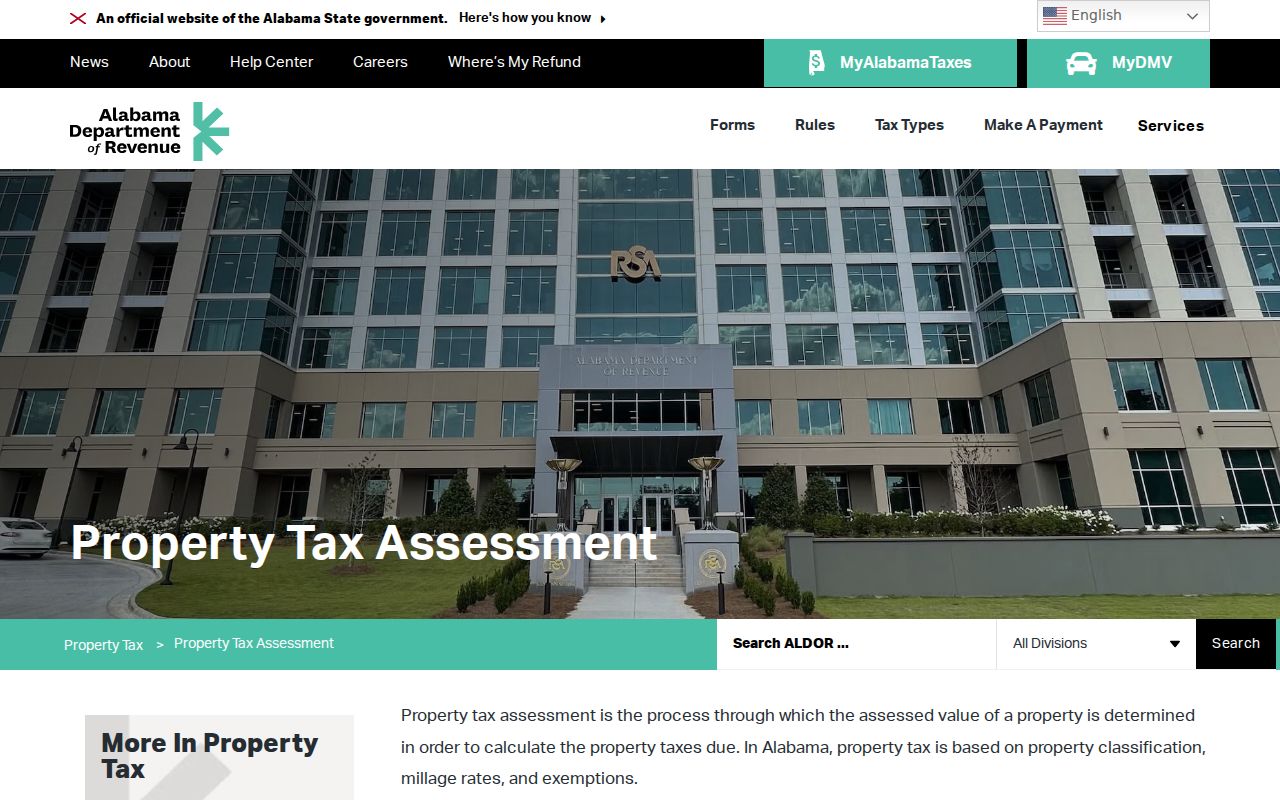
ALDOR sets the ratios; Walker Revenue holds each parcel entry.
Estimate a Walker Record Value
Begin with the parcel, not a rough street match. The county system may list a physical address that differs from the owner's mailing address.
- Normalize the address and confirm that Walker County assesses the parcel.
- Use PIN, account, or PhyAddr in the county CAMA search.
- Record the tax year, class, appraised value, assessed value, exemption, and only fields actually displayed.
- Retrieve the deed for consideration and transfer context. Mark whether its image was read.
- Use recent comparable market evidence and a qualified appraisal for a current market opinion.
- Assessed value
- Appraised value after the classification ratio.
- Appraised value
- Revenue's fair-market estimate for tax administration.
- Assessment ratio
- The percentage assigned to the property's Alabama class.
- Consideration
- The transaction figure in or associated with a deed, which may not be a market sale.
- Reassessment
- A later update of the official value, not necessarily a new sale.
Walker Fields Need Labels
The static Walker CAMA search exposes a wide field set: TL Acres and TL Value as range filters, plus PIN, Account, Owner, PhyAddr, District, Subdivsn, ExemptCode, deed book and page, deed date, and section, township, and range. TL Value is a tax-list filter. It is not proof of a sale price. Treat it as a narrowing aid for a property search, nothing more.
Report tabs are labeled Basic, Parcel, Bldg, and Land. The card does not guarantee a land and improvement split, a value history, a last-sale amount, or an update date. Always cite the tax year and field label.
Caps Change Walker Comparisons
Act 2024-344 caps covered increases in taxable assessed value at 7 percent for Class II and Class III property. Separate true assessed value from taxable assessed value. The two can diverge. A quick seven-percent calculation from a listing price or deed consideration is not supported.
Homestead and other exemptions can widen the gap further. Alabama's H-1 through H-4 categories depend on facts such as primary residence, age, disability, and income. A qualifying homestead may cover the residence and up to 160 acres. Applications run through Walker Revenue.
Walker Deeds Explain Consideration
The Walker Probate records page is one place to find the deed. The county-linked ING land index is another. Record the grantee, grantor, recording date, instrument type, and the book and page or instrument number. Note whether you viewed the image itself. An index line is only a pointer.
Alabama recordation tax follows statutory measures for deeds and mortgages. It cannot replace the deed's consideration clause. A family transfer, corrective deed, estate distribution, multi-parcel deal, or nominal consideration can make one transaction a poor comparison.
Walker Update Timing Is Unpublished
No Walker-wide revaluation cycle or fixed deed-to-roll refresh schedule is published. A new deed can hit the record before the owner or value fields move. Cite the recording date and the tax or data year. Skip assumptions about a typical lag.
For appraisal questions, call Walker Revenue appraisal at 205-384-7298. The main line is 205-384-7267. Ask when the displayed tax year was set. Ask whether a correction or reassessment is pending. Also ask which value field controls the issue.
Value Disputes Have a Clock
ALDOR says a written protest goes to the County Board of Equalization within 30 calendar days after the written valuation notice. The clock is real. Useful evidence includes the notice, PIN, corrected property facts, dated photos, a qualified appraisal, and comparable sales.
ALDOR's value-dispute answer spells out the protest path.
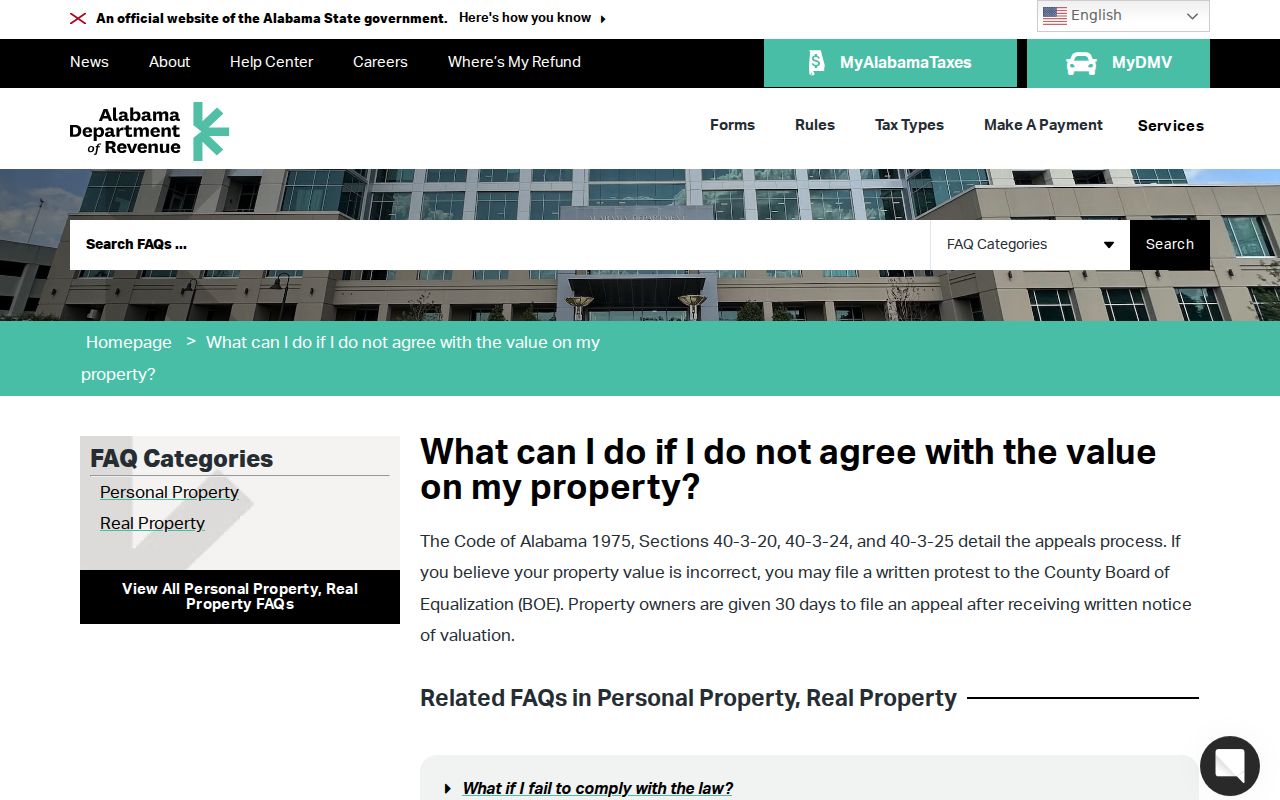
The deadline is context. The full bill, exemption, and appeal workflow belongs on Walker property tax records.
Walker Assessment Is Not Price
Revenue values exist for tax administration. They may rest on mass-appraisal methods, a classification ratio, exemptions, and a tax-year snapshot. A buyer's price turns on the property, terms, date, and market. Lenders and owners may need a licensed appraisal.
Value is not price. A Walker assessed or appraised value does not promise what a parcel will sell for. Do not treat TL Value, assessed value, or one deed figure as a current appraisal.
Save the source URL, access date, tax year, class, and exact label with every number. Parcel geography lives on Walker parcel maps. Recorded transfer detail lives on Walker deed records.
Log Walker Value Evidence
Log every figure with care. For each number you pull, note its exact label and amount. Record the tax year or transaction date too. Add the PIN, the URL, and the date you accessed it. Say plainly whether you read a full deed image or just an index row from the deed records. That distinction matters. Without it, everything blurs together. A tax estimate, a taxable figure, deed consideration, and a market opinion become one value that nothing supports.
Comparables deserve the same discipline. Check class, land size, building facts, location, sale terms, and date before treating any nearby parcel as a match. Walker County publishes no official comparable-sales selection tool. A privately assembled set carries no assessor endorsement because of that. Frame it as your own comparison, never as county opinion.
Walker Value Evidence Needs Dates
Every value field needs company. Record the tax year, the property class, and the source beside each figure you keep. Alabama assessment ratios shift by class. Homestead exemptions can cut taxable assessed value further. Act 2024-344 adds a 7 percent cap on qualifying Class II and Class III taxable assessed-value increases, but a cap is not a sale appraisal, and assessed value should never pass for one.
Deed records raise their own timing trap. A recorded deed may state consideration, yet that amount still needs the instrument date and the transaction context around it. Yesterday's figure is rarely today's market price. When a transfer, exemption, classification change, or reassessment intervened, compare the matching years rather than treating two unmatched screens as one valuation date.
When a public result will not load, the Walker County Revenue office can clarify the tax year, class, exemption, and assessment fields on the tax roll. Bring the parcel PIN and your notice. An address alone slows things down. Write the source and retrieval date beside each value so figures from different cycles never get compared as if they were current together.